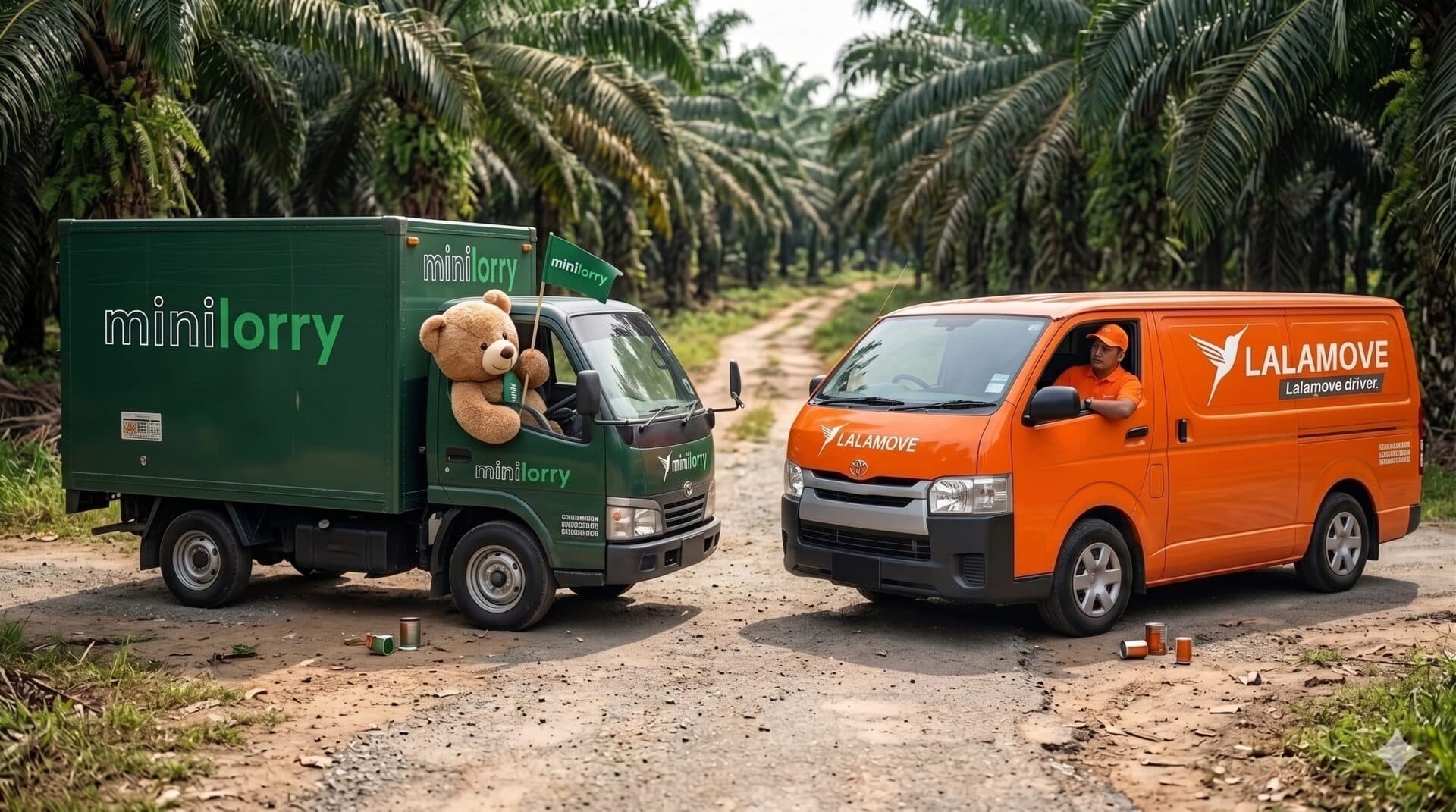
Diesel Hit RM3.35/Litre — So Why Hasn't Lorry Rental in Malaysia Gone Up?
Diesel jumped 55% in Malaysia since the 2024 subsidy rationalisation. Dedicated fleets had to raise prices. Idle-fleet platforms like Minilorry have not — and the reason is structural, not promotional.
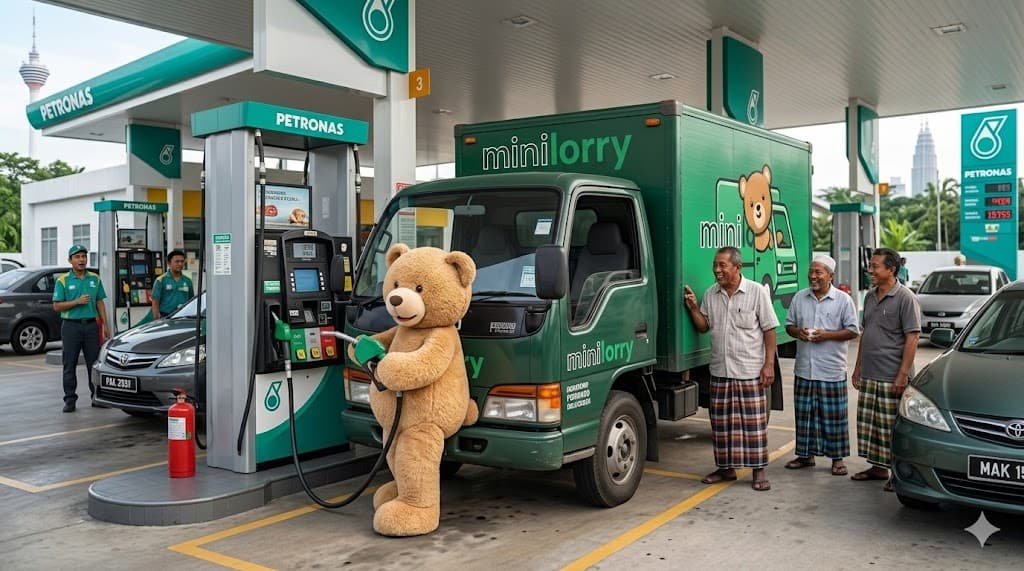
In June 2024, Malaysia ended the blanket diesel subsidy for commercial users. Pump diesel for fleets went from roughly RM2.15 a litre to around RM3.35 — a 55% jump, overnight. Every 1-ton, 3-ton, and 5-ton lorry on the road suddenly cost meaningfully more to run.
By the textbook, lorry rental prices should have followed. Fuel is the single biggest variable cost of running a delivery lorry, after the driver. Dedicated fleets (the Lalamoves and traditional movers of the world) did raise prices — quietly, in increments, but they did. Yet most Minilorry vendors did not. The same Petaling Jaya to Cheras 3-ton trip that cost RM110 in early 2024 still costs RM110 today.
That is not generosity. It is structural. Here is why.
The math: how much is diesel actually in a typical trip?
Take a standard 3-ton lorry doing a 40km round-trip job in the Klang Valley. At 12 km/litre (typical for a loaded 3-ton diesel), that is about 3.3 litres of fuel.
- At the old subsidised diesel price (RM2.15): ~RM7 of fuel.
- At the post-subsidy price (RM3.35): ~RM11 of fuel.
So the absolute fuel-cost increase on a single trip is roughly RM4. On a RM110 trip price, that is about 3.6% of the customer-facing rate. Not nothing, but not catastrophic.
The catastrophe is what happens when you stack that RM4 on top of the rest of a dedicated fleet's cost structure: driver wage, lorry loan, road tax, fleet insurance, depreciation, parking, GPS, and platform commission. In a dedicated fleet, every one of those costs has to be recovered from your trip price, because the lorry exists to do trips. There is nothing else paying for it.
Why dedicated fleets had to raise prices
A dedicated fleet — whether it is a logistics company that owns its own lorries or a commission marketplace whose gig drivers own theirs — runs on thin margins precisely because it has to recover the entire cost of the lorry from delivery jobs.
When diesel jumps 55%, the fleet operator has two choices: absorb the hike (and watch margin disappear) or pass it on (and lose price competitiveness). In practice, every dedicated fleet in Malaysia did some version of the second. Lalamove repriced. Mover.my repriced. Independent yard operators repriced. They had no choice.
Commission marketplaces have an extra problem: they take 15–25% off the top of each trip. So when the underlying driver economics get worse, the platform has to raise the customer price by more than the fuel hike — because their commission cut is a fixed percentage of the new, higher price. Diesel goes up by RM4, but the customer might end up paying RM6–RM8 more once the commission stack is rebuilt.
Why idle-fleet platforms did not have to
Minilorry vendors are hardware shops, building-material suppliers, and small distributors. They already own the lorry for their main business — moving cement, paint, pipes, fixtures to job sites. Their fixed costs (loan, road tax, insurance, parking, depreciation) are already paid for by the margin on cement and tiles. The Minilorry trip is marginal income on top of an existing operation.
What that means in fuel-hike math: the only cost the side-trip actually has to cover is fuel plus driver overtime. The fixed costs are already covered. So when diesel jumps RM4 on a trip, the vendor's choice is not "pass it on or lose margin." It is "still take the RM110 and earn RM4 less" versus "let the lorry sit idle and earn RM0."
Earning RM4 less is still infinitely better than earning RM0. So the vendor keeps the price flat, swallows the RM4, and the customer never sees the diesel hike at all.
Zero commission compounds the effect
Minilorry does not take a commission per trip. The vendor charges the customer directly, and the platform earns from a monthly vendor subscription instead. That means when diesel goes up, there is no commission stack that has to be rebuilt on top of the higher cost. The full RM4 goes from the customer's pocket straight to fuel; nothing extra has to be added to cover a percentage cut.
This is why the price stayed flat even when input costs went up. There is no third party in the middle whose margin has to be protected.
What this looks like over time
Between mid-2024 and 2026, here is roughly what happened to the same PJ → Cheras 3-ton trip across the market:
- Commission marketplace (Lalamove-style): RM110 → RM135 → RM145 (about +32% over 24 months, mostly diesel passthrough + commission rebuild).
- Dedicated logistics fleet: RM120 → RM135 (about +12%).
- Yard rental: RM140 → RM160 (about +14%).
- Idle-fleet platform (Minilorry): RM110 → RM110 (flat).
The gap between Minilorry and the rest of the market has actually widened over the last two years — because everyone else had to pass on diesel, and idle-fleet vendors did not.
The wider point
When the underlying cost of running a lorry goes up, customers feel it from any provider whose entire business depends on lorries earning their own keep. Customers do not feel it from providers whose lorries are already paid for by another business. That is the whole idle-fleet thesis in one sentence.
Diesel is the cleanest test of this principle, because diesel is a universal input — every lorry on the road buys it at the same pump. If the customer-facing price moved for one provider and not another, it is not because one was kinder than the other. It is because their economic structures were different all along.
Next time fuel hikes, watch which platforms raise prices and which do not. The ones that stayed flat were not absorbing a loss out of generosity. They were the ones whose lorries were going to be parked anyway.